This project explored how the portal could evolve from a transactional entry point into a more intelligent dashboard experience. The goal was to help users quickly understand network activity, supplier and buyer engagement, key metrics, and high-priority actions.
I worked as Lead Product Designer, responsible for UX strategy, dashboard exploration, stakeholder workshop synthesis, user-role mapping, and concept direction.
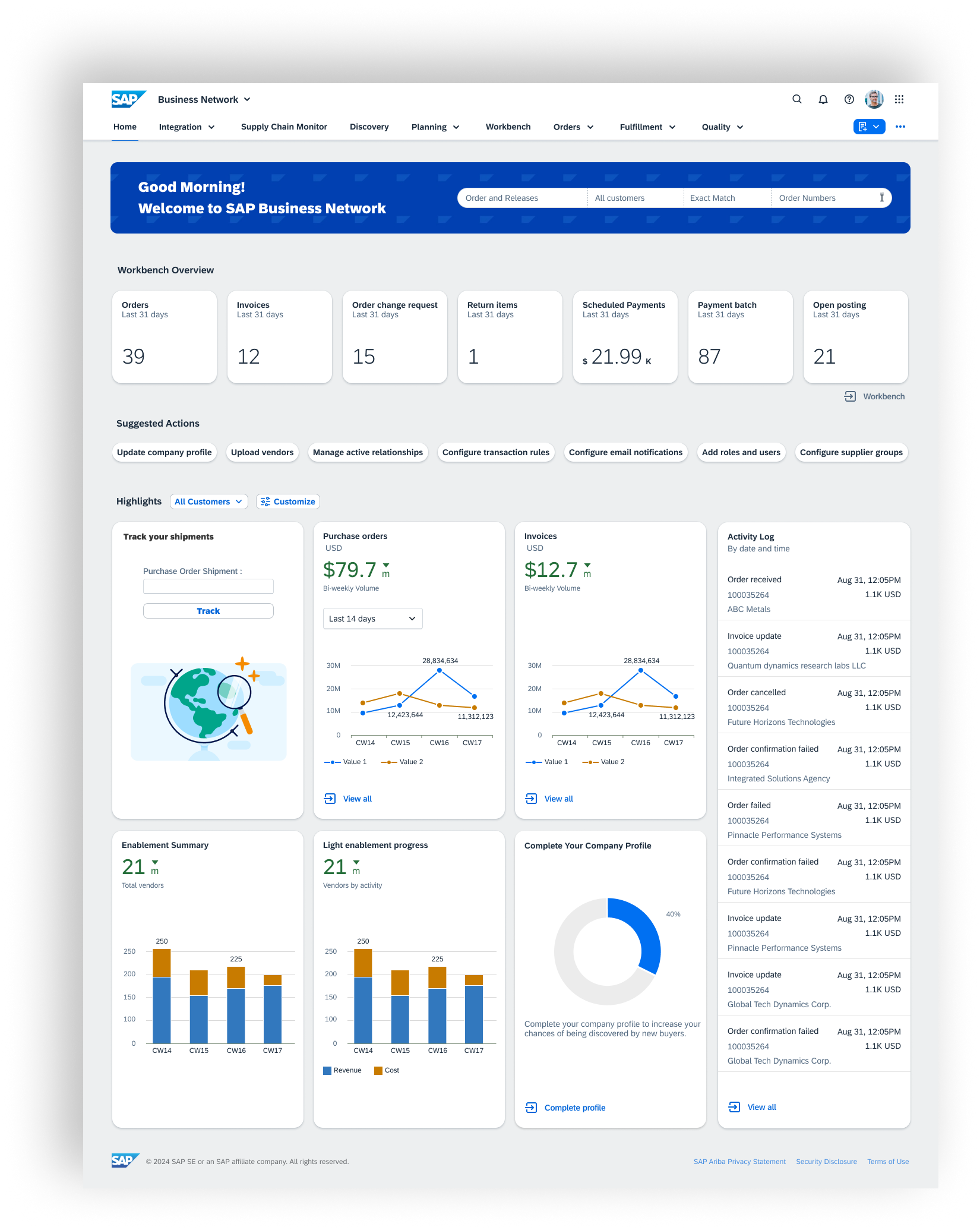
The existing portal surfaced important business information, but the experience felt fragmented and limited as a daily operational hub.
Users needed key metrics, supplier activity, network performance, relationship insights, and pending actions to be easier to scan, prioritize, and act on.
The experience served buyers tracking supplier activity, network reach, and business performance; suppliers looking for faster access to tasks and transaction insights; and trading partners who needed a central place to monitor collaboration and engagement.
I led the UX direction for the dashboard concept. I synthesized stakeholder workshops, mapped user roles, explored dashboard structures, and defined a concept that could support different user needs across the trading partner network.
The key direction was to create a role-based dashboard that could bring together business health, active buyers, suppliers, transaction volume, network reach, and urgent actions in one place.Rather than treating the portal as a login gateway, the design positioned it as a daily operating view.
The dashboard needed to help users understand what was happening, where attention was needed, and which opportunities were available.
The concept organized the portal around role-based widgets, high-value metrics, activity summaries, and action-oriented insights. It gave buyers and suppliers a clearer view of network activity and created a foundation for future personalization, product discovery, and workflow shortcuts.
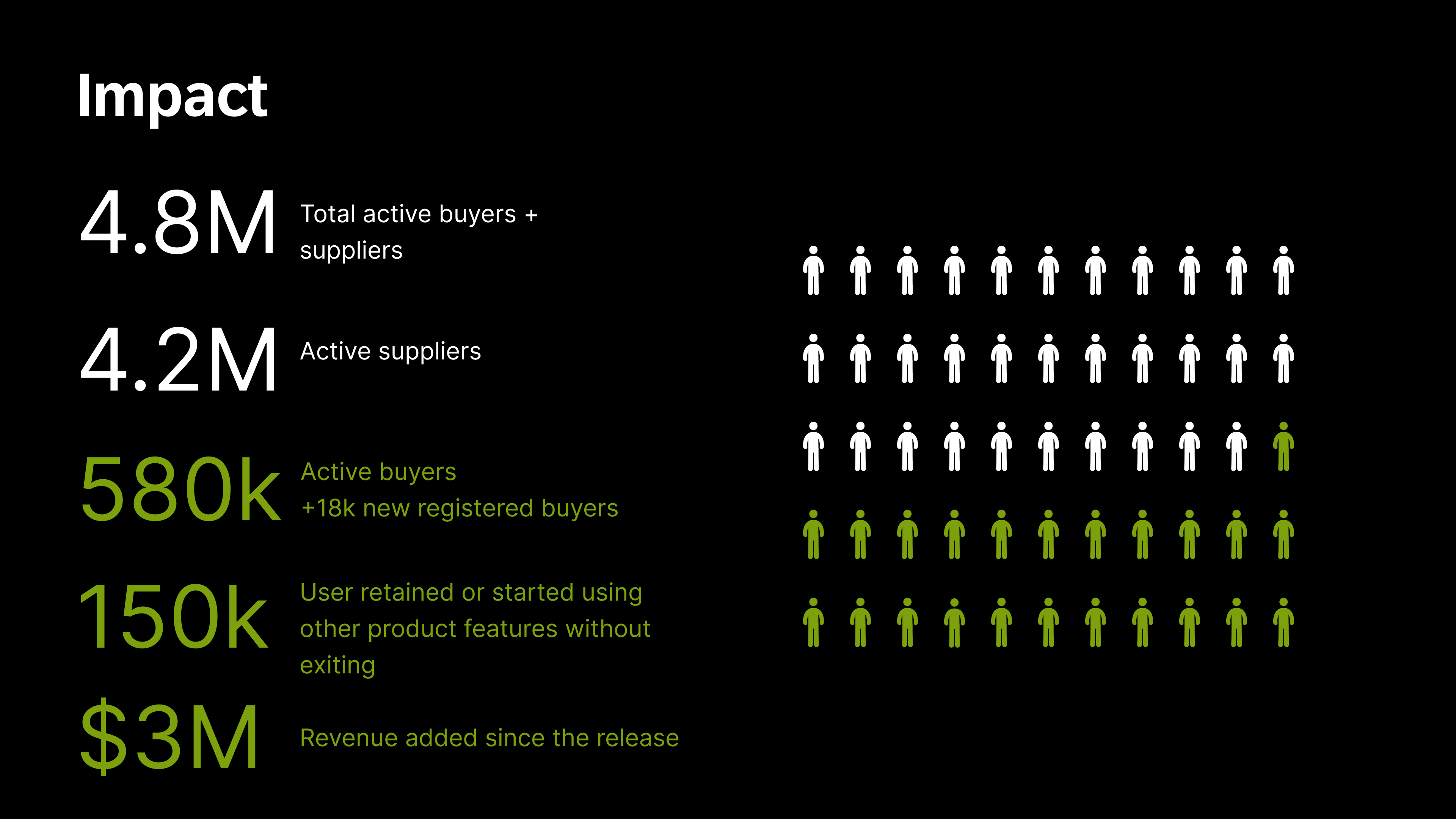
The work supported a network scale of 4.8M total active buyers and suppliers, improved visibility for 4.2M active suppliers, highlighted 580K active buyers including 18K newly registered buyers, helped retain or activate 150K users across adjacent product features, and contributed to an estimated $3M in added revenue after release.From a UX perspective, the redesign reduced friction by centralizing metrics, actions, and insights.
It helped users understand value faster and created a scalable framework for future role-based dashboard experiences.

For the full case study and additional information, please reach out to raghuraik44@gmail.com


