Side quest · Concept

Inkfold

A concept for a healthier phone. Inkfold turns a foldable's cover into e-ink, a calmer display, so everyday use costs less of your attention and you reach for immersion on purpose.
Intro

Today a foldable's cover and inner screen are the same bright, high-stimulation display, so a three-second glance at a notification lands on the same surface as an endless feed, and a calm task slides into a scroll. Inkfold changes the cover to e-ink: a low-stimulation surface for the small, frequent tasks like reading, notifications and messaging, with the full-color screen inside for anything immersive. When the display matches the kind of attention a task wants, the device guards that attention on its own, without asking the person to.

Role
Concept and interaction designer
Team structure
1 Designer
Tools
Problem

A phone spends your attention by default. Every quick task opens onto a feed built to keep you there.

The idea

Make the foldable's cover e-ink for everyday tasks, and keep the color screen inside for immersion.

The payoff

A healthier phone. Everyday use stays calm, and reaching the feed takes a deliberate choice.

The goal

A healthier relationship with the phone. Make the calm surface the default, so protecting your attention is the device's job, not a daily act of willpower.

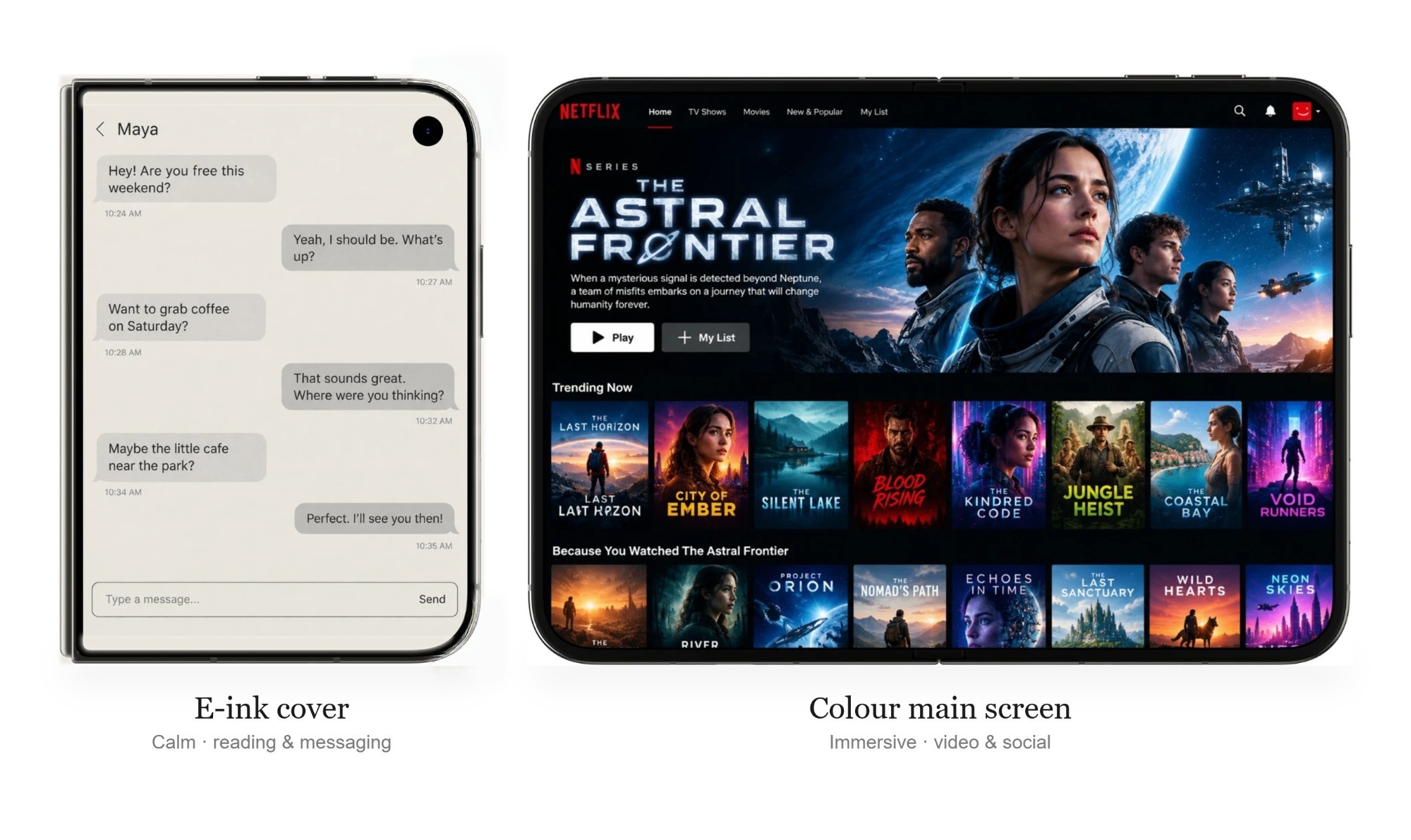
Two modes of one foldable: the closed cover showing a calm grayscale e-ink reading page, and the open screen showing Netflix in full colour.
01

Two screens, one mindset.

A foldable already splits into a cover and a larger screen inside, but both are the same bright, high-refresh color display. The cover is a smaller version of the inside, so a glance at a message and a film play out on the same kind of surface: saturated, animated, and built to hold your attention.

02

A quick glance and an endless feed share one surface.

Most phone use is small and functional: check the time, read a notification, answer a message. Low-load tasks, but they run on a screen built for immersion, one tap from an infinite feed.

So the medium turns a two-second task into twenty minutes. The cost is cognitive, and it adds up across a day: scattered attention, and a pull that stays with you after you put the phone down.
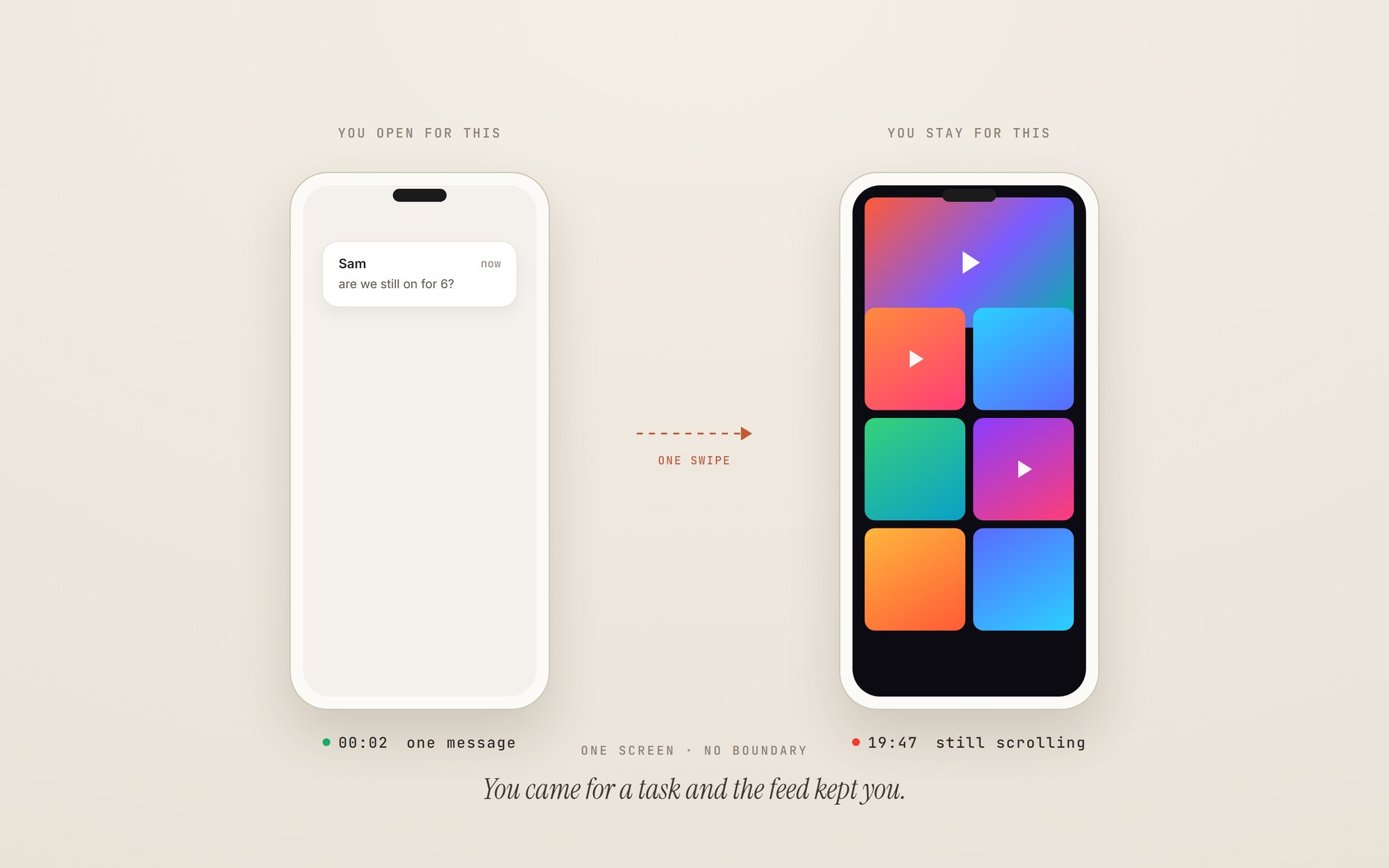
Two phones side by side: one calm screen with a single message, opened for two seconds, and one full of a bright video feed, still scrolling nineteen minutes later

Fig 1. You open for one message and the feed keeps you. Same screen, no boundary.

03

Match the medium to the mind.

Not all tasks want the same kind of attention. Reading a message is calm and glanceable; watching a film is immersive. Today's phone uses one high-arousal medium for both. A foldable already has two surfaces and a deliberate gesture between them, so the kind of display, not only its size, can mark the mode of attention.
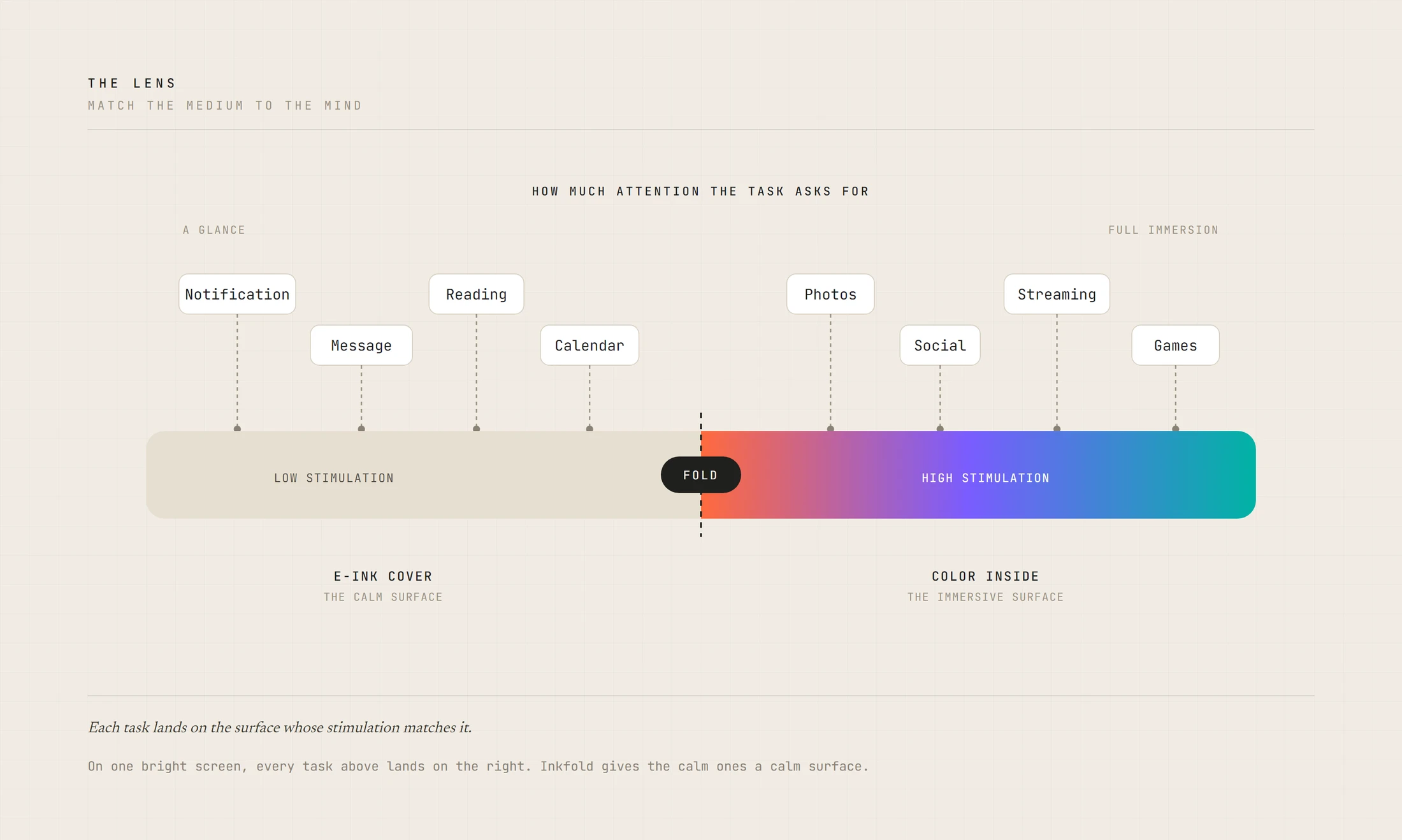
A stimulation scale with tasks placed by how much attention they ask for: Notification, Message, Reading and Calendar on the calm low-stimulation side, Photos, Social, Streaming and Games on the high-stimulation side, split by the fold into an e-ink calm surface and a color immersive surface

Fig 2. Each task asks for a different kind of attention, so it belongs on a surface with the matching amount of stimulation.

04

A calm e-ink cover, an immersive color inside.

The cover turns to e-ink for the everyday, low-load tasks: reading, notifications, messaging, tickets. The inside stays full color for anything immersive.

Opening the fold becomes a deliberate switch, from a calm frame of mind to an engaged one.
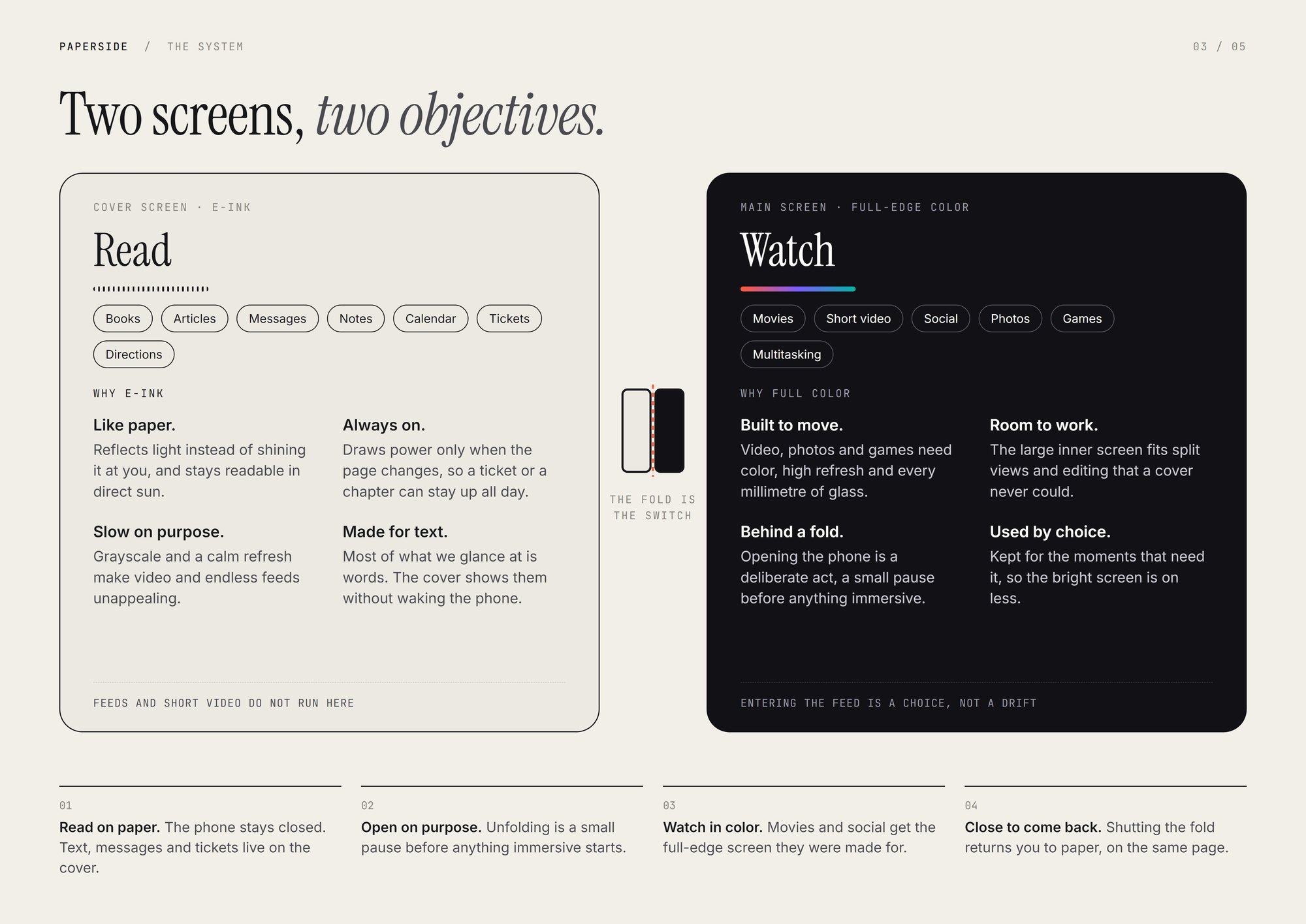
Two cards: Read on the e-ink cover screen and Watch on the full color main screen, with the reasons for each and a four-step flow below

Fig 3. Two surfaces, two mindsets: a calm cover, an immersive inside.

05

E-ink works like print, and that is what makes it calm.

An e-ink screen is a thin film of tiny black and white particles. To show a page, they shift into place to form the text, then hold it with no power and no light of their own. You read it by reflected light, the way you read paper: no backlight to stare into, no image refreshing underneath, no color tugging at the edge of your eye. Those same properties make it reflective in sunlight, readable for hours, and good for days on one charge.

E-ink · paper, grayscale
Like paperReflects light instead of shining it at you, readable in direct sun and easy on the eyes.
Low stimulationNo backlight, no motion, no saturated color, so a quick glance adds almost nothing to your load.
Holds without powerThe page stays put with the screen off, so a ticket or a chapter can sit there all day.
Made for textMost quick checks are words: a message, a time, a notification. The cover shows them without waking the phone.
One less deviceThe phone becomes the e-reader, so there is nothing extra to carry or charge.
06

A color screen does the opposite, and that is the point of immersion.

An RGB screen lights itself. Millions of red, green and blue dots glow and mix into any shade, and the whole picture redraws dozens of times a second. That is what makes film, photos and games feel alive, and it is the same brightness and motion that make a feed so easy to sink into. What carries a film is too much for a two-second glance, so the color screen earns its place for the moments that want it, and stays off the cover for the ones that do not.

RGB · bright, moving
Built for immersionFilm, photos and games need color, high refresh and every millimetre of glass.
Self-lit and fastGlowing subpixels and a high refresh rate make motion smooth and color deep.
Room to workThe large inner screen fits the split views and editing a cover never could.
Behind a foldYou reach it on purpose, by opening the phone, not by reflex.
07

To reach the feed, you open the phone, and that opening is a small pause for intention.

The pause sits between the impulse and the feed. It works through the medium itself, the way choice architecture does, rather than through timers, app limits or willpower.

01 Read on paperThe phone stays closed. Text, messages and tickets live on the cover.
02 Open on purposeUnfolding is the only way into the feed.
03 Watch in colorFilm and social get the full-edge screen they were made for.
04 Close to come backShutting the fold returns you to the calm surface, on the same page.

Handoff. A book or article continues at the same paragraph when you open or close the phone.

Notifications. Text shows on the cover as plain text. A feed or video app shows only its name and open to view, so the content stays behind the fold.

App rules. Apps declare their surface. Reading, messaging, notes, calendar, wallet and maps run on the cover. Short video, social feeds, streaming and games run inside only.

08

The cover goes e-ink, the inside stays color.
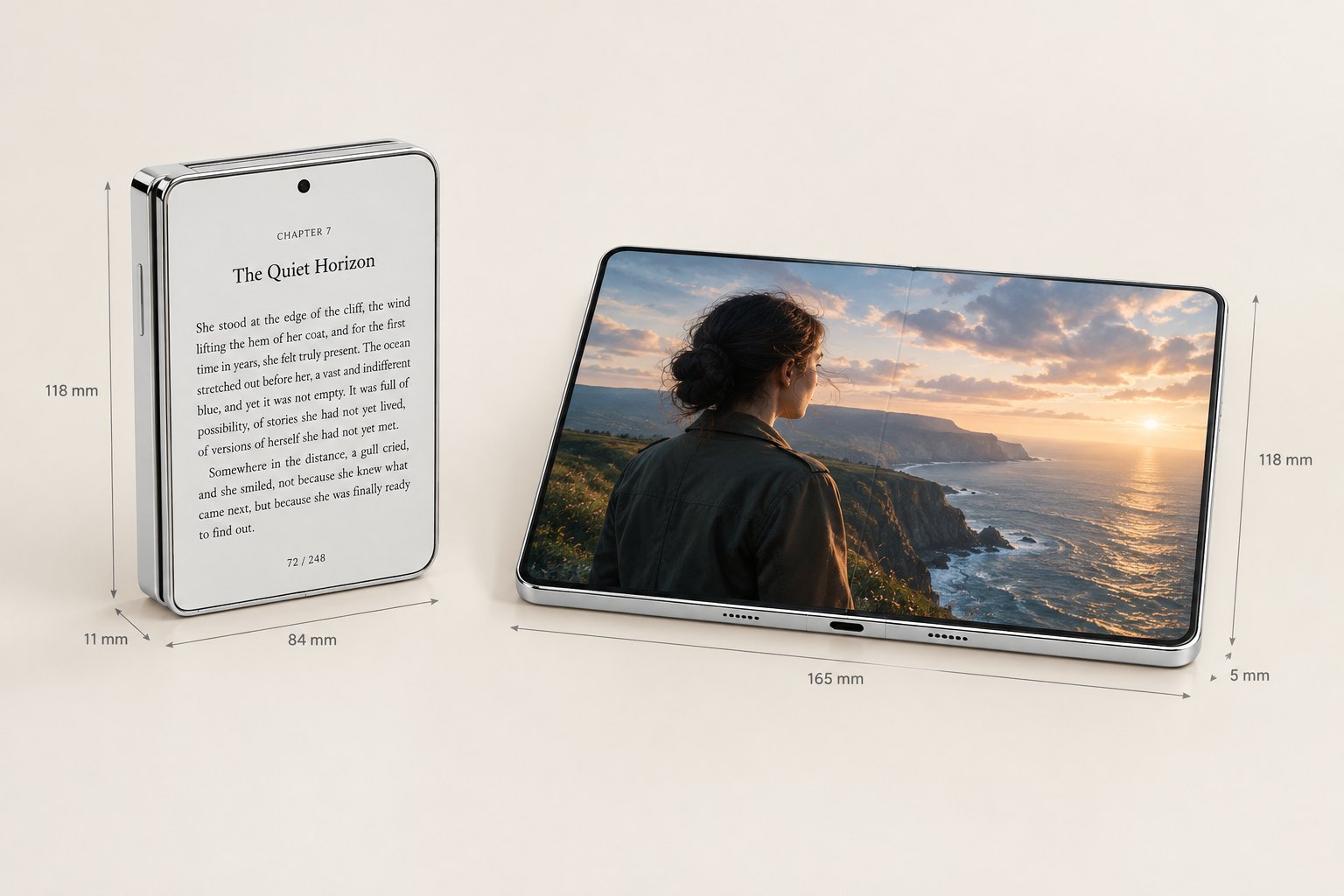
iPhone Duo closed on an e-ink cover showing a book page, and open in landscape playing a film

Fig 4. iPhone Duo. A 5.4 inch e-ink cover and a 7.6 inch color screen inside.

09

The same split on a different foldable.
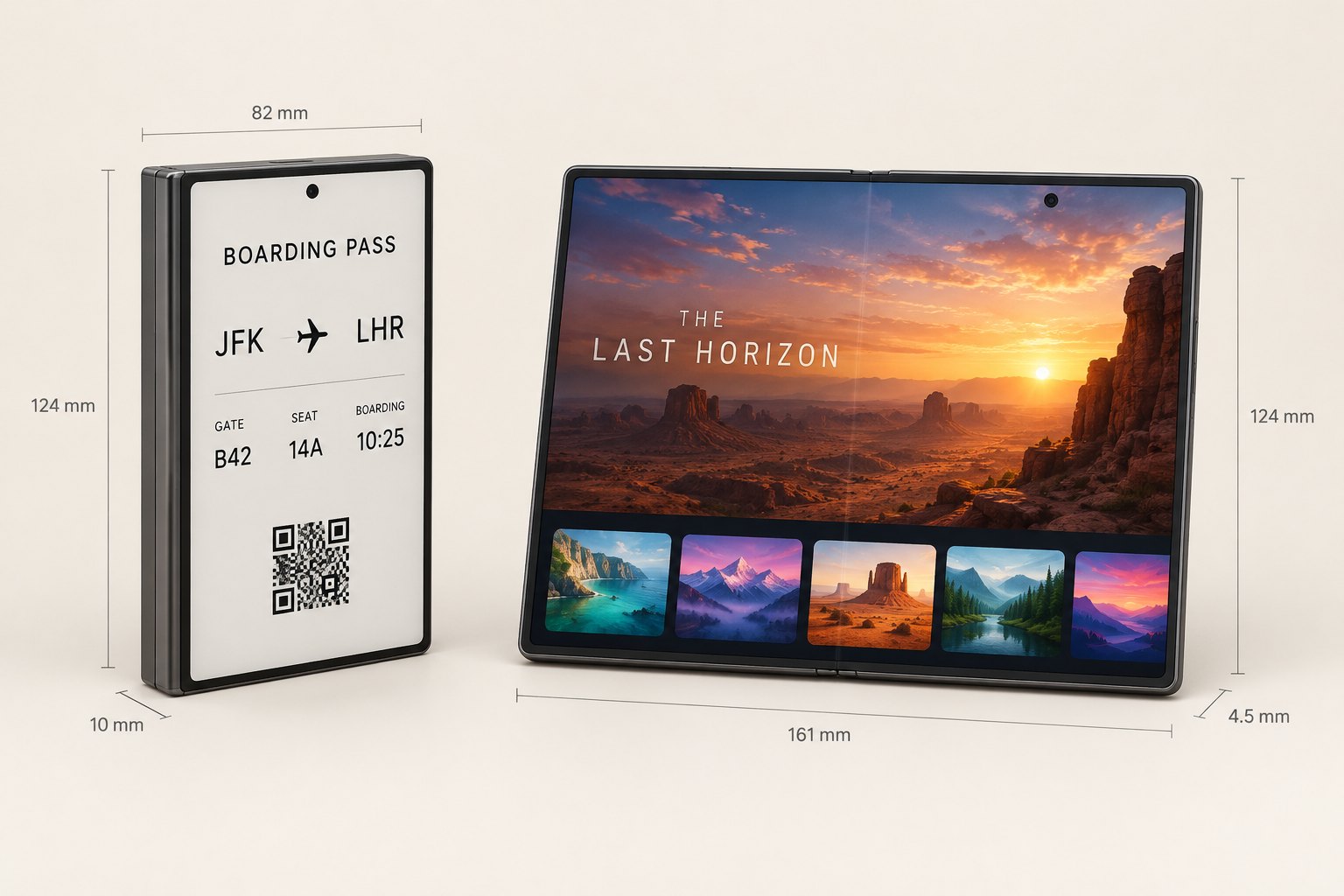
Galaxy Z Fold 8 closed on an e-ink cover showing a boarding pass, and open showing a streaming app

Fig 5. Galaxy Z Fold 8. A 5.5 inch e-ink cover and a 7.6 inch color screen inside.

Concept study. iPhone is a trademark of Apple Inc. and Galaxy is a trademark of Samsung Electronics. Not affiliated with either.

10

A healthier phone, by design.

CalmerEveryday glances move to a low-stimulation surface, so routine use asks less of your attention.
IntentionalThe feed sits behind a deliberate gesture, so scrolling becomes a choice instead of a reflex.
Built inThe calm comes from the medium itself, so there is no timer, setting or willpower to rely on.
11

Designing for wellbeing, at the hardware level.

The healthiest fix here is not more software. Settings, timers and grayscale modes still leave the work to the person. A different medium changes the default, and the limits of e-ink, its stillness and grayscale, are what make it work.

This is a concept, and a starting point. The obvious next step is to test it: a diary study comparing cognitive load and scroll time on a standard foldable against one with an e-ink cover.

Next projectToken SpaceSee your design system as a shape.